Lifestyle — March 6, 2026
Redefining Luxury: What Burberry and Miu Miu Teach Us About Modern Branding
As usual, a TikTok post sparked the inspiration to write. This time, it came from @newsfash, who explored how luxury brands are pampering their customers in ways that could be considered hard to come by — next-level brand-client management and a smart adaptation to the evolving definition of luxury.
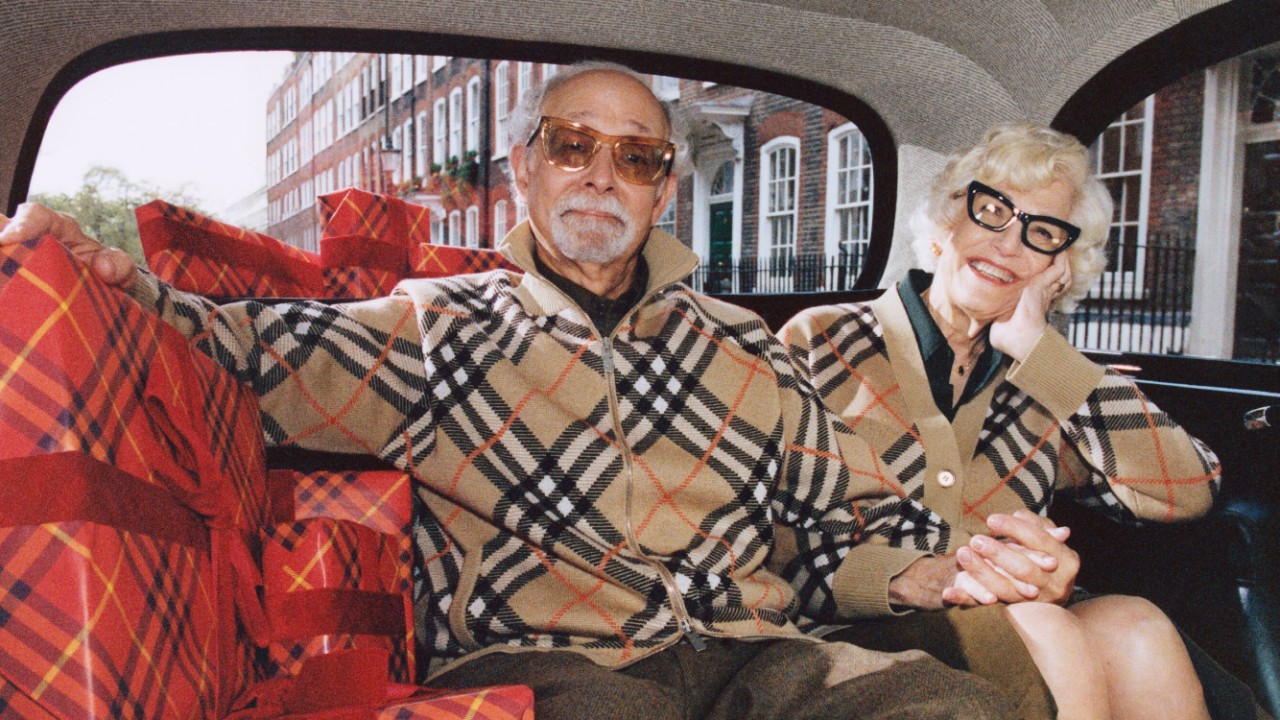
Drs. Herschel and Lilly Stoller courtesy of Burberry
To celebrate the 2024 holiday season, Burberry launched a campaign titled “Wrapped in Burberry: Friends & Family” Unlike previous campaigns, this time Burberry didn’t just feature “celebrities” but also included its own loyal customers. The campaign stars Drs. Herschel and Lilly Stoller — a couple living in Nebraska, David Tennant and Alex Hassell — real-life friends and iconic figures on the British stage and screen, and Slawn and Tallula Christie — the duo behind the community café BeauBeaus in East London.
Personally, I was particularly drawn to Drs. Herschel and Lilly Stoller — a married couple of doctors living in Nebraska, United States. You could say they are “ordinary people” with no social media portfolio and not influencers by any means. Yet, they have the means to purchase luxury goods — and choose to do so. Why? Because they resonate with the values, aspirations, and their personal relationship with Burberry (as shared in an interview with Cultured).
Looking at how Burberry executed its campaign this year, there are several lessons we can take away as business owners or brand builders. Burberry is striving to deliver personalized luxury tailored to the modern consumer — not by focusing solely on one segment, but by carefully embracing a broader spectrum of the market. This approach illustrates how Burberry blends both Blue and Red Ocean Strategies: competing in the existing luxury market by emphasizing heritage, exclusivity, and craftsmanship (Red Ocean), while also tapping into new market segments by creating demand through innovation, technology, sustainability, and inclusivity (Blue Ocean).
 Dr. Qin Huilan courtesy of Dr. Qin Instagram
 Sue Kroll courtesy of Loewe
Another example of a similar strategy has been implemented by several other brands. Dr. Qin Huilan, a 72-year-old retired doctor (born in 1952), never expected to become a fashion influencer or to collaborate with major brands like Prada and Miu Miu (SCMP & 10Magazine). Notably, with Miu Miu, Dr. Qin even walked the runway for the Autumn/Winter 2024 show. Then there’s Sue Kroll — Head of Marketing at MGM Studios — who took part in Loewe’s Spring/Summer 2025 precollection campaign.
These three brands — Burberry, Miu Miu, and Loewe — are excellent examples of how luxury labels are adopting innovative strategies to engage diverse consumer segments amid global economic uncertainty. Let’s briefly unpack each of their approaches.
Burberry stands out for providing a luxury experience to clients who may not be ultra-wealthy but are loyal and aspirational. The brand leverages a sophisticated CRM system to track customer preferences and offer personalized sessions (based on CRM data). It also releases limited-edition collections exclusively on social media, targeting young professionals and aspirational clients. Burberry’s commitment to sustainability further appeals to socially-conscious consumers.
Miu Miu, the sister brand of Prada, targets young professionals and fashion enthusiasts who prioritize uniqueness over traditional luxury. The brand hosts special events, offers personalization, and leans into the “Quiet Luxury” aesthetic through bold yet minimalist designs. Meanwhile, Loewe, led by Jonathan Anderson, blends artistic storytelling with accessible luxury for modern professionals. The brand focuses on handcrafted pieces and collaborations with artisans, attracting customers who value authenticity. Iconic yet relatively accessible items like the Puzzle Bag resonate strongly with younger audiences.
Looking at the common thread among them, these luxury brands manage their consumers through personalized experiences, aligning products with shared values, creating accessibility without sacrificing exclusivity, and actively engaging younger consumers (Millennials and Gen Z) through social media and digital platforms. This is achieved through limited-edition drops, made-to-order programs, and exclusive events.
As Western luxury brands redefine exclusivity through inclusivity and personalization, the question arises: could this strategy ultimately reshape the definition of luxury itself? And what about Indonesian brands? now read to the next chapter